


You’re reading “Echoes in Time,” a weekly newsletter by the Independent Herald that focuses on stories of years gone by in order to paint a portrait of Scott County and its people. “Echoes in Time” is one of six weekly newsletters published by the IH. You can adjust your subscription settings to include as many or as few of these newsletters as you want. If you aren’t a subscriber, please consider doing so. It’s free!
Today’s newsletter is sponsored by the Scott County Chamber of Commerce. Since 1954, the Scott County Chamber of Commerce has advocated for a strong community by supporting stronger infrastructure and leadership.

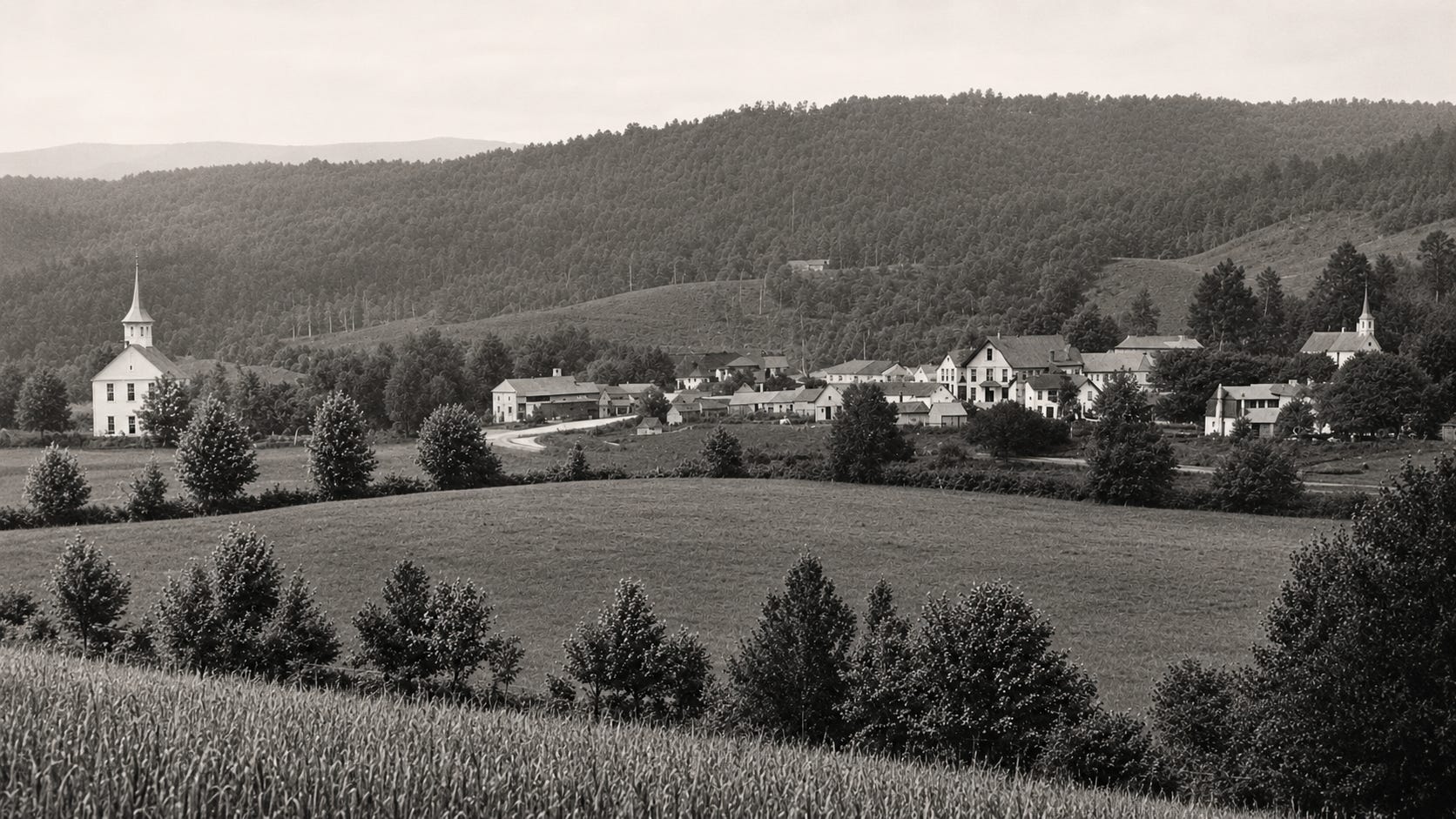
The man who laid out Huntsville
In 1850, Wayne White-Cotton was charged with engineering the design of the seat of government for Tennessee’s newest county.
Scott County had been formed by the Tennessee General Assembly in 1849. The legislature carved out parts of Anderson, Campbell, Morgan and Fentress counties to create the new county, which was named for War of 1812 hero Gen. Winfield Scott. The reason for the new county: settlers in the areas of Oneida, Helenwood, and Huntsville (though the towns weren’t known by those names at the time) had to travel too far through the mountains or across the river to reach county seats in Jamestown or Jacksboro. And, so, Scott County came to be.
One of the first decisions that had to be made when Scott County was formed was where to place the county’s seat of government. A committee was appointed, and they considered three different possibilities — a farm on Buffalo Creek, a farm on Paint Rock Creek, and the site we now know as Huntsville.
Ultimately, the committee chose Huntsville. There was a natural spring that flowed heartily, providing a good source of drinking water. The land was relatively flat. And it was centrally located.
That job complete, another committee was appointed to acquire the land. Those men were John L. Smith (the county’s first circuit court clerk), Allen McDonald (the first county clerk), John Lewallen (the first sheriff), Isaac Reed (the first trustee), and Riley Chambers (the first registrar). The committee purchased 25 acres of land owned by George McDonald and Emanuel Phillips.
Once the land was purchased, it needed to be surveyed, and that’s where Whitecotton came in. He engineered the survey team, plotting the town into 49 lots — beginning with the county’s first courthouse, and the lots that would surround it.
And the Town of Huntsville was born.
Born William Wayne Whitecotton on Feb. 4, 1811, Whitecotton was the son of Aaron Whitecotton (1780-1870) and Nancy Ann Hatfield (1786-1870). He had several siblings: Keziah Thompson, Elizabeth “Betty” Chitwood, Nancy Ann Smith, Dorcas Pennington, Helen Mary O’Dell, Elvira Murrill, and Smith Whitecotton.
Wayne’s mother, Nancy Ann, was the daughter of Revolutionary War veteran Joseph Hatfield who later settled in what would become Scott County. His father, Aaron, was the son of James Whitecotton and Ruth Newton. He was originally from Virginia, but the family moved to Kentucky, and he married Nancy in Wayne County in 1807.
Around 1844, Aaron Whitecotton moved his family from present-day Scott County to Missouri. They also changed their name; Aaron adopted “White” as his middle name and left his last name as “Cotton.”
Several of Wayne’s siblings moved to Missouri with their parents. However, Wayne remained in Scott County, and played the role in the Town of Huntsville’s creation a few years later. He had just married at the time his parents moved, to Mary “Polly” Owens (1821-1885), the daughter of William Solomon Owens and Nancy Chambers of Buffalo Creek.
Wayne and Polly had seven children: Celina, Martha, China, Tasmon, French, and Walker. (Wayne may have also fathered a child, Elizabeth, with Sarah Lee West, who later married Johnathin “Egg” Phillips.)
The Whitecottons who moved to Missouri were noted supporters of the Confederacy during the Civil War. An 1865 Union report listed Wayne’s sister, Keziah Whitecotton Thompson, as a “notorious rebel family.” She and her son, George Washington “Wash” Thompson, took food to rebel soldiers who were encamped on their farm. (Her husband, Henry Thompson, was a grandson of Revolutionary War veteran Randolph Lawson of Scott County.) And Wayne’s only brother, Smith, served in the Confederate army.
But Wayne was a Union loyalist, like most other Scott Countians. When Col. William T. Clift of Chattanooga traveled to Scott County and formed the 7th Tennessee Infantry in Huntsville, Whitecotton enlisted. He mustered into service on June 14, 1862. A few months later, when Confederate forces marched on Huntsville and engaged the entrenched 7th Tennessee along River Road in September 1862 at the Battle of Huntsville, Whitecotton was captured and taken prisoner. He remained in rebel captivity until Nov. 8, 1862, when he was released in a prisoner exchange at Richmond, Va.
The 7th Tennessee had been routed at the Battle of Huntsville, and many of its men — who were untrained Scott County farmers, not career military men — simply went home. They were considered deserters, and once Whitecotton had been released from rebel captivity, Col. Clift hired him to round up the deserters.
It was on his second excursion back to Scott County to find the deserted men and coerce them back into service that Whitecotton fell ill with smallpox. He died at his home on April 21, 1863, at the age of 52. He is buried somewhere on Paint Rock Creek, though no one is sure where.
Polly lived until April 13, 1885. It’s also unclear where she was buried.
One of Wayne and Polly’s children, China, married John Marion Cordell. He was elected Scott County Judge in the 1870s and went on to the state legislature in Nashville.
Meanwhile, Wayne Whitecotton wasn’t the only person involved with the formation of Huntsville who died in the service of the Union during the Civil War.
Allen McDonald, who had been elected the county’s first court clerk and served on the committee to lay out Huntsville, served in the 7th Tennessee Infantry with Whitecotton. And, like Whitecotton, he was taken captive by rebel forces at the Battle of Huntsville. He was paroled or escaped — no one is sure which — but was suffering from camp fever when he arrived back in Scott County from Knoxville in November 1862. He died at the home of Andrew Lawson. His burial location is unknown.
And Emanuel Phillips, the man who provided the property where Huntsville was located, enlisted in the Union army at Chitwood (Winfield) on June 7, 1862, assigned to the 8th Tennessee Volunteers. He died of smallpox in Knoxville on Feb. 12, 1864, and is buried at Knoxville National Cemetery.
Emanuel Phillips was a grandson of Revolutionary War veteran Abraham Goad of Scott County.
Thank you for reading. Our next newsletter will be Threads of Life tomorrow. If you’d like to update your subscription to add or subtract any of our newsletters, do so here. If you haven’t yet subscribed, it’s as simple as adding your email address!
◼️ About the IH • IH Sports Network • The Encyclopedia of Scott County
◼️ Subscribe • Sponsor • Manage Your Account
◼️ Follow us on Facebook, Instagram, X/Twitter, YouTube
Our Newsletters:
• Monday morning: The Daybreaker (news & the week ahead)
• Tuesday: Echoes from the Past (stories of our history)
• Wednesday: Threads of Life (obituaries)
• Thursday evening: The Weekender (news & the weekend)
• Friday: Friday Features (beyond the news)
• Sunday: Varsity (a weekly sports recap)