



You’re reading “Echoes in Time,” a weekly newsletter by the Independent Herald that focuses on stories of years gone by in order to paint a portrait of Scott County and its people. “Echoes in Time” is one of six weekly newsletters published by the IH. You can adjust your subscription settings to include as many or as few of these newsletters as you want. If you aren’t a subscriber, please consider doing so. It’s free!
Today’s newsletter is sponsored by the Scott County Chamber of Commerce. Since 1954, the Scott County Chamber of Commerce has advocated for a strong community by supporting stronger infrastructure and leadership.

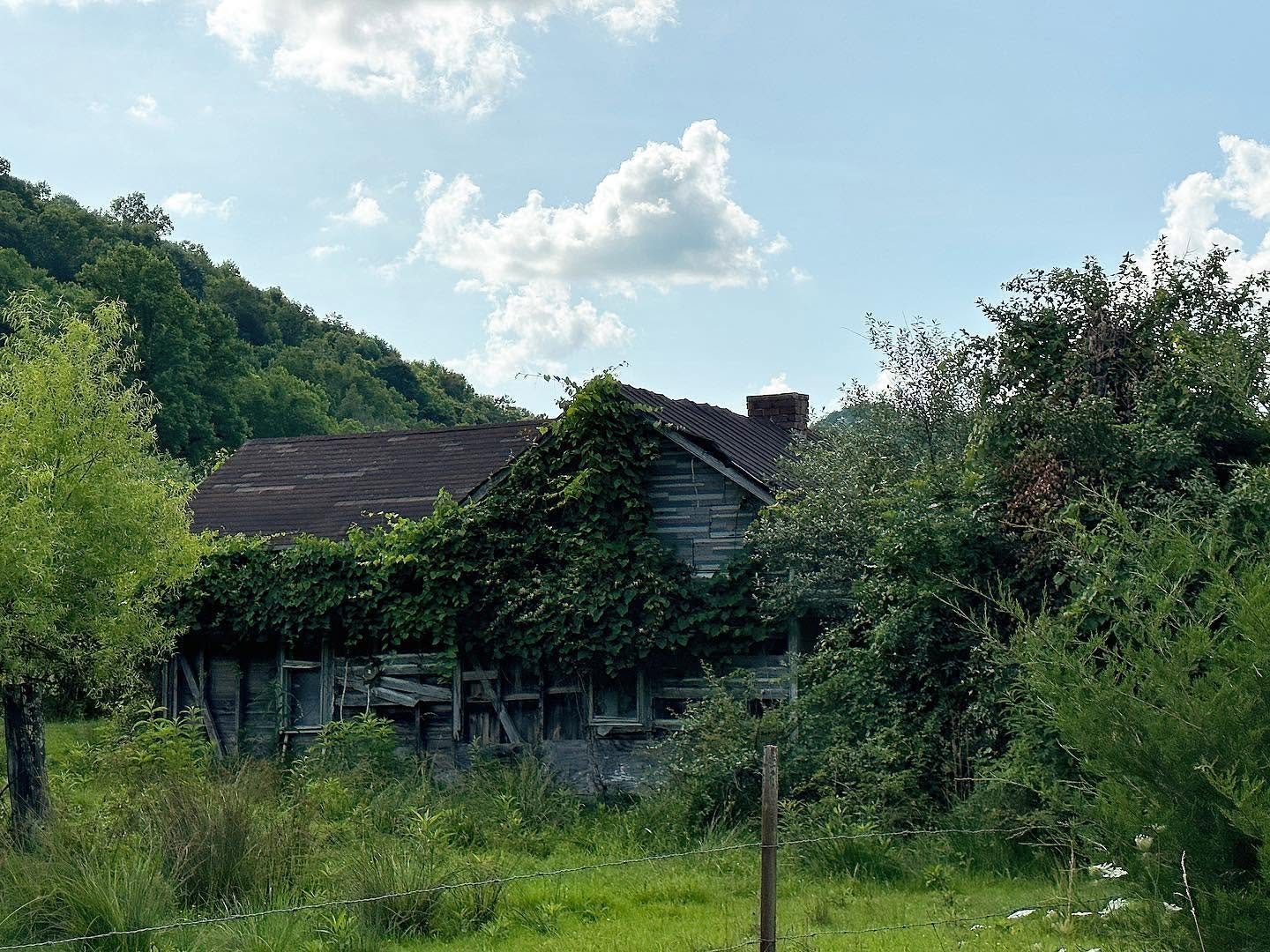
Scott County’s communities: Brimstone
Two weeks ago, the Independent Herald‘s “Echoes in Time” series profiled the Black Oak community in western Scott County. Continuing in alphabetical order, we shift southward this week to Brimstone.
Nestled in the Cumberland Mountain valleys along Brimstone Creek, this was long the coal-mining and logging hub of Scott County. It was originally known as Hughett, for the name of the first postmaster, Jasper Hughett. Another post office was located at what is now known as Lone Mountain, near the head of Brimstone Creek.
Generally speaking, Brimstone is considered to be everything along the creek from the “head of the creek” above Lone Mountain to the intersection of Brimstone Road and Low Gap Road at Mt. Pleasant. From there, Brimstone Creek follows Low Gap Road and the old Tennessee Railroad on to New River, while Brimstone Road turns west and winds out of the valley to U.S. Highway 27 at Robbins. Another major road in the community is Ridge Road, which exits Brimstone Road near Robbins and reconnects at Indian Fork, while also providing an exit to Black Wolf Creek.
Originally, settlement at Brimstone began in the creek valley and then spread to the mountaintops, including Round Mountain and Griffith Mountain. Today, settlement is limited to the creek valley.
Post Office: Today, the residents of Brimstone are served by the Robbins Post Office. Historically, there were two post offices located at Brimstone. There was Hughett, which was located near where Huntsville Branch and Indian Fork Creek empty into Brimstone Creek at Slick Rock, and Cortland, which was located near Lone Mountain.
Hughett opened in January 1887 and was named for its postmaster, Jasper Hughett, who would go on to become a prominent businessman at Robbins, owning a retail store and a share of the bank there.
Cortland opened in December 1892 with Eldridge Shannon serving as postmaster. It isn’t clear where the name originated.
In September 1935, Hughett post office closed and moved to Cortland. Its last postmaster was May Chambers. In December 1936, Cortland post office closed and moved to Robbins. Cassie Griffith was the last postmaster there.
Schools: A number of schools served the Brimstone community through the years. In 1935, there were no fewer than five elementary schools located along Brimstone Creek: Pemberton, which was located where Brimstone Road meets Low Gap Road at Mt. Pleasant; Slick Rock; Gilbert, located just south of Slick Rock; Lone Mountain; and Griffith, located on Indian Fork Creek in the vicinity of Griffith Mountain.
One by one, those schools gradually closed and students began traveling to Robbins for school. It was there that Jasper Hughett helped organize a high school in 1906. The first students graduated from the high school in 1915, and the first class to receive high school diplomas was in 1918. Robbins High School closed in 1971, when Scott County consolidated high schools in Robbins, Norma, and Huntsville, and opened Scott High School. The last principal at Robbins High School was Taskel Welch, who was also the first principal at Scott High.
Business & Commerce: There have never been much in the way of retail at Brimstone. Today, the only business on Brimstone Creek is Full Throttle Campground, which is located above Lone Mountain and caters to riders from Brimstone Recreation and the North Cumberland Wildlife Management Area.
Industry, however, is a different story. Brimstone was traditionally one of the chief hubs for coal-mining and timber-cutting in Scott County, dating back to shortly after the arrival of the Cincinnati-Southern Railroad, which included a depot at Robbins. Its opening in 1880 helped open lands throughout Scott County to natural resource exploitation by making coal and timber much easier to transport out of the rugged terrain.
The first railroad into Brimstone Creek was built in the 1880s. It was the Knoxville & New River Railroad, a narrow-gauge rail that left the Southern Railroad near where the Robbins Brick Yard would later be located, crossed the ridge, and reached Brimstone Creek in the vicinity of where Indian Fork Creek empties. From there, it followed Brimstone Creek to Lone Mountain. Its purpose was to reach the virgin stands of timber in the area of Lone Mountain. There were plans to extend the railroad over the mountains to Knoxville, but it was never completed.
Years later, the Brimstone Railroad was built, connecting with the Southern Railroad at New River and following Brimstone Creek from the river all the way to Lone Mountain. The purpose of the Brimstone Railroad was to assist the coal-mining industry.
As the 1900s progressed, several different coal-mining operations opened at Brimstone. There were two different tipples that served the coal industry, each with a side rail connecting to the main railroad. There was one at Huntsville Branch and another near Lone Mountain. Brimstone was home to two fatal mine explosions in the mid 20th century. The Phillips-West Mine Disaster killed nine men on March 23, 1959, and the Kline Mine Disaster killed five men on May 24, 1965.
Beginning in 1909, the Round Mountain Lumber Company began purchasing land in the mountains surrounding the Brimstone Creek valley. That company was purchased by the Payne family from Harrisburg, Penn., in the 1920s and was managed by Howard H. Baker Sr. The company became known as the Payne-Baker Company, and eventually became known as the Brimstone Land Company in the 1970s when it was purchased by Howard H. Baker Jr. and W.H. Swain. At one point, the Brimstone Company owned one-sixth of all the land in Scott County. It still holds some mineral rights near Brimstone, but much of the land has since been sold to other timber companies. In the 2000s, the State of Tennessee purchased much of the mountaintop areas around Lone Mountain and Slick Rock for the North Cumberland Wildlife Management Area.
Churches and Cemeteries: There are three churches on Brimstone Creek — Lone Mountain Baptist Church, Slick Rock Missionary Baptist Church, and Mt. Pleasant Missionary Baptist Church. The largest cemetery on Brimstone is the Lone Mountain Cemetery, adjacent to the church. Another large cemetery is Slick Rock Cemetery. A number of smaller cemeteries are found throughout the community, including the Rob Sexton Cemetery on Round Mountain that dates back to Revolutionary War veteran Timothy Sexton, and the Goad Cemetery near Slick Rock that dates back to Revolutionary War veteran Joseph Griffith. Other cemeteries include the Walker cemeteries on Indian Fork Creek, the Hughett Cemetery near Slick Rock, and the A.J. Robbins Cemetery near Slick Rock.
Origins: The Brimstone community is one of Scott County’s original settlements, though it was part of Anderson County at the time and later Morgan County. It dates back to when Revolutionary War veteran Joseph Griffith was granted land on Brimstone Creek and moved his family there after the war. He was a personal bodyguard to General George Washington when Washington accepted Lord Cornwallis’s surrender at Yorktown, ending the war.
Anderson County was formed in 1801 from portions of Knox and Grainger counties. In 1817, Morgan County was formed and included the Brimstone community. In 1849, Scott County was formed and included the Brimstone community.
It’s not clear where the name Brimstone originated. It’s commonly accepted that it was born of the “fire and brimstone” spoken of in the Bible, but the exact context is unknown.
First Families: Although the exact timeline of their migration to Brimstone Creek is unknown, the first families to settle Brimstone were the Griffith family and the Robbins family.
Pvt. Joseph Griffith served in the 7th Virginia Regiment under the command of Gen. George Washington, and saw action at several different battles. He married Phoebe Hudson in 1792. The exact location of their Brimstone farm is unknown, but it was likely in the vicinity of what is now Gib Griffith Lane near Slick Rock.
Joseph and Phoebe Griffith had several children, and all Griffiths in Scott County today are descended from them. Many of the people who still live at Brimstone are Griffiths or related to the Griffith family.
The Sexton family was also an early family to settle at Brimstone, including Revolutionary War veteran Timothy Sexton. His son, William Sexton, married Joseph Griffith’s daughter, Rhoda. Timothy Sexton was originally from New Jersey and married Esther Sisel, which some speculate may have been a derivative of the surname we know as Cecil. They married in South Carolina in 1782 and had as many as 14 children. They moved first to Georgia and then to present-day Scott County. A land survey shows that Timothy Sexton owned land on the west side of New River in 1808. He was living on Brimstone Creek in 1819. When he applied for a veteran’s pension in 1825, he owned 30 acres of land, a small cabin, and several livestock.
The Robbins family at Brimstone dates back to at least 1814, when 140 acres were surveyed on Brimstone Creek for Michael Robbins. However, he appeared on an Anderson County tax list in 1805, and may have lived at Brimstone then. He married Mary “Polly” Lewallen, the daughter of Anderson Grant Lewallen of Black Wolf Creek. One of their children was William Robbins, who was the first man to sign an oath of allegiance to the Scott County Home Guardduring the Civil War. Because of that, his home was targeted by Confederate soldiers at the Battle of Brimstone in April 1862. That battle was a victory for the Home Guard. His home was located near what is now Gib Griffith Lane.
It was for the Robbins family that the town of Robbins was later named.
Another of Michael Robbins’ children, Elizabeth Emily Robbins, married Joshua Goad Jr., a grandson of Revolutionary War veteran Abraham Goad, who lived on New River south of present-day Huntsville. Joshua and Emily established a farm near where Indian Fork Creek empties into Brimstone Creek — known as the Walker Farm today — making the Goads another of Brimstone’s first families. They had a son, Joshua Goad, who served as sheriff of Scott County. Their daughter, Etta Tennessee Goad, married Scott County School Superintendent William F. Lee. She was the grandmother of U.S. Congressman and Knoxville Mayor John J. Duncan Sr.
The Hughett family was another of the early Brimstone families, beginning with William Hughett. Originally from Virginia, his lineage isn’t completely clear, but it’s possible that he was a grandson of Abraham Goad (daughter of Elizabeth Goad, who married William E. Hughett). He married Jane “Jincy” Jeffers. They had eight children. One of them, John Hughett, was a justice of the peace for 44 years in the Robbins area. A grandson, Frank Hughett, served as Sheriff of Scott County. Another grandson, Jasper Hughett, was the first postmaster at Brimstone and later a prominent merchant at Robbins.
Not yet mentioned is the Overton family, which settled on Mill Creek near Lone Mountain. It dates back to John and Nancy Overton. Their descendants became quite a prominent family in the Lone Mountain area. Their son, William “Bill” Overton, was the first person buried at the Overton Cemetery on Mill Creek in 1920.
Finally, the Walker family became quite prominent at Brimstone in the latter part of the 19th century. Samuel Walker (1818-1907) married Mary Ann Elizabeth Hutson (1818-1910). They did not move from North Carolina to Indian Fork Creek until sometime after 1850. Daniel Walker, their son, was a Union soldier during the Civil War who was captured by Confederate forces, escaped, and made his way back to Brimstone Creek by subsisting on acorns and other woodland foods as he journeyed home. He married Almira Goad, the daughter of Joshua Goad and Elizabeth Emily Robbins, which is how the Goad Farm at Indian Fork Creek came to be known as the Walker Farm.
Thank you for reading. Our next newsletter will be Threads of Life tomorrow. If you’d like to update your subscription to add or subtract any of our newsletters, do so here. If you haven’t yet subscribed, it’s as simple as adding your email address!
◼️ About the IH • IH Sports Network • The Encyclopedia of Scott County
◼️ Subscribe • Sponsor • Manage Your Account
◼️ Follow us on Facebook, Instagram, X/Twitter, YouTube
Our Newsletters:
• Monday morning: The Daybreaker (news & the week ahead)
• Tuesday: Echoes from the Past (stories of our history)
• Wednesday: Threads of Life (obituaries)
• Thursday evening: The Weekender (news & the weekend)
• Friday: Friday Features (beyond the news)
• Sunday: Varsity (a weekly sports recap)