


You’re reading “Echoes in Time,” a weekly newsletter by the Independent Herald that focuses on stories of years gone by in order to paint a portrait of Scott County and its people. “Echoes in Time” is one of six weekly newsletters published by the IH. You can adjust your subscription settings to include as many or as few of these newsletters as you want. If you aren’t a subscriber, please consider doing so. It’s free!
Today’s newsletter is sponsored by the Scott County Chamber of Commerce. Since 1954, the Scott County Chamber of Commerce has advocated for a strong community by supporting stronger infrastructure and leadership.

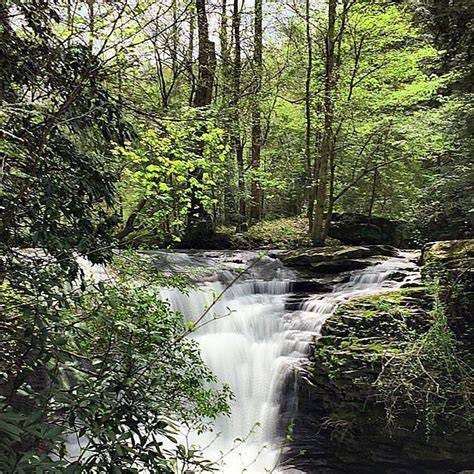
Scott County’s communities: Black Creek
This week, the Echoes in Time series resumes its profiles of Scott County’s communities, visiting the Black Creek community near Robbins. Before there was the railroad, U.S. Highway 27, or Robbins itself, the main road through Scott County crossed Black Creek before climbing the ridge to what became known as the Crossroads (Black Creek Crossroads) and continuing on toward Jamestown.
It was at Black Creek that future President Andrew Johnson is said to have lodged in 1861, when he visited Scott County to make his plea for preserving the Union. He delivered a stirring speech on the steps of the county courthouse in Huntsville the next day, and local residents responded by voting against secession by the largest margin of any county in Tennessee.
Today, Black Creek is a bedroom community — and a sparsely settled one at that. There are no stores, no schools, and only a couple of churches. Only a handful of homes are located “on the creek” itself, with dozens more located on the higher ground of Crossroads, Grassy Knob and near the “foot” of Mountain View.
For all intents and purposes, Black Creek can be considered anything in the valley through which the creek flows. The stream has its headwaters near Robbins Elementary School and empties into the Clear Fork River roughly halfway between Burnt Mill Ford and the confluence with New River. The ridge to the south of Black Creek is West Robbins. The ridge to the north is Mountain View. For the purposes of this profile, the crossroads to the southwest, where Mountain View Road, West Robbins Road, Skull Creek Road and Honey Creek Road intersect (Black Creek Crossroads) and the ridge separating Clear Fork from New River (Grassy Knob) will be considered part of Black Creek. That is the way that both were historically considered. Black Creek is part of the larger Robbins area, and was included in the failed attempt to incorporate Robbins in the late 1980s.
POST OFFICES: The Black Creek community is served by the Robbins Post Office (37852). There has never been a post office at Black Creek. The post office at Robbins opened in 1879 with the construction of the Ciincinnati Southern Railroad, which located a depot there. The post office was first called Bianco and later was called Ernie.
SCHOOLS: Students in the Black Creek community were traditionally educated at Black Creek School, which was located in the same building as Black Creek United Baptist Church. Later, a separate building was constructed for the school. It served students along the creek and in the flats below Mountain View, as well as Grassy Knob and Crossroads. Students from the east end of Mountain View attended Robbins, and there was a separate school at West Robbins. When Black Creek School closed in the mid 19th century, students from the community began to be educated at Robbins Elementary School. High School students from Black Creek were traditionally served by Robbins High School, which opened in the early 1900s. In 1971, Scott High School opened in Helenwood and Robbins High School closed.
CHURCHES & CEMETERIES: There are two long-standing churches in the community, including Black Creek United Baptist Church and Black Creek Crossroads Missionary Baptist Church. There was once a third church, Sovereign Grace Baptist Church, which disbanded in the early 1990s. Nearby is West Robbins Baptist Church, and residents of the community have traditionally attended Mountain View and First Baptist Church of Robbins, as well. Another church that no longer exists is West Robbins Church of God of Prophecy.
Cemeteries in the Black Creek community include Kilbeck Cemetery and Black Creek Crossroads Cemetery. The latter is one of the three largest cemeteries in Scott County (along with Hazel Valley and Carson Memorial Park). There are two more small family cemeteries located on Grassy Knob: Terry Cemetery and Wright Cemetery.
BUSINESS & COMMERCE: There has never been much commerce at Black Creek. There have traditionally been stores located at West Robbins and Mountain View on either side of the valley, while Robbins itself was once a bustling little railroad town. The stores at both Mountain View and West Robbins have long since closed. There was a small store that operated on Mountain View Road just north of Black Creek United Baptist Church until the 1980s.
ORIGINS: Today, Black Creek is hardly a speck on the map. Before the construction of U.S. Highway 27, however, the main road through this section of Scott County traveled along Black Creek. It emerged at what is now Robbins where the railroad depot would be built in the 1870s. It left the valley at what is now Mountain View Road and connected to a road that eventually led to Jamestown by way of Rugby Road (now S.R. 52). Another road traveled up the ridge to Grassy Knob, then to New River at Silcox Ford and on to Helenwood.
There were several roads that left the valley and connected to the ridge tops on either side, though most are no longer in use. Besides Mountain View Road and Black Creek Road, the only two roads leaving the valley today are Ben Smith Road and Kilenbeck Road.
Interestingly, the Kilbeck Cemetery at Black Creek is only known to date back to 1870. The nearby Black Creek Crossroads Cemetery doesn’t date back that far. The two small family cemeteries on Grassy Knob were not founded until the 20th century. Were there no deaths in the Black Creek community prior to 1870? Were the dead buried in graves that have been lost to time? The answers to these questions might help date the start of settlement in the valley.
FIRST FAMILIES: The earliest families at Black Creek were the Lackey and Smithers (sometimes spelled Smither) families.
The Lackeys: The Lackey family of Black Creek dates back to James Silas Lackey (1786-1880). He was first married to Hannah Stevenson (1792-1861) and later married Elizabeth “Betsey” Hicks (1810-1877).
The Lackey family came to America from Ireland. James Silas Lackey’s father, Thomas Keaton Lackey (1744-1845), was born in Londonderry before sailing to America with his parents and settling in North Carolina.
James Silas’s children are believed to have included Phineas Stevenson Lackey (1818-1887), Richard Ross Lackey (born about 1826), Thomas C. Lackey (born about 1828), Joel Lackey (1830-1919), Margaret Lackey (1830-1860), Joseph Lackey (born about 1837), and Nancy Lackey (born about 1838).
James Lackey was buried at Kilbeck Cemetery in the Black Creek community when he died in 1880, according to cemetery historian Robert Bailey. However, a headstone cannot be located at the cemetery.
There are Lackey descendants still living at Black Creek today. Jeff Davis, whose home is located where the former Sovereign Grace Baptist Church once stood, is the grandson of Addie Lackey Davis. She was a great-granddaughter of James Lackey, who was perhaps the valley’s first settler. The home she grew up in was used for the church.
The Smithers: The Smithers family at Black Creek dates back to William Smither (1807-1881) and Eva Sanders (1809-1881). The Smithers family married into the Lackey family. William and Eva had a daughter, Jane Smithers (1844-1917) who married Joel Lackey, one of James Lackey’s children. (Joel and Jane Lackey were Addie Lackey Davis’s grandparents.)
The Smithers family has remained prominent at Black Creek through the years. Caldwell Smither, a great-grandson of William and Eva Smither, was elected Scott County Trustee in the 1940s. He died from a shotgun blast at Grassy Knob in 1946, at age 42. His death was the source of considerable mystery. Sheriff Frank Butler ruled out homicide and concluded that the blast was self-inflicted — either intentionally or by accident. Lifelong friends insisted that Smither would not have committed suicide.
Mike Smithers, another descendant of William and Eva Smither, is currently the pastor at First Baptist Church of Robbins.
The Newports: Another early family of Black Creek was the Newport family — Solomon Newport (1851-1888) and his wife Temperance McCartt (1850-1930). Solomon’s father, Richard Hicks Newport, served in the Civil War and was taken prisoner by the Confederate army. He died at the infamous Andersonville prison camp in Georgia in 1864. His son, Calvin Newport (Solomon’s brother), was killed in action during the war.
Solomon and Temperance moved to Black Creek after they were married. They had at least six children. One of them, William, died at age four in 1880 and was buried at Kilbeck Cemetery. Solomon’s brother, Ezekiel, had a baby boy, Alfred, who was also buried at the cemetery in 1880, indicating that perhaps Solomon wasn’t the only member of the Newport family who lived at Black Creek — though Ezekiel later lived at Helenwood.
The Smiths: The Smith family also lived at Black Creek during the early years, dating back to Henry Smith (1850-1904) and Caroline Kennedy (1848-1910). They had at least five children: Samuel, Mint, Fountain, Dave, and Reni. The Smith family remained at Black Creek through the years. Henry and Caroline’s grandson, Ben M. Smith (1918-2008), married Beatrice Norris (1920-2013) and was the namesake of Ben Smith Road, which connects Black Creek to West Robbins. Their son, Fred Smith, still lives on the family home place today.
The Ellises: The Ellis family was perhaps the most prominent family in the Black Creek area through the years, though it is most commonly associated with nearby Black Creek Crossroads. This family dates back to Edward Ellis (1818-1875) and Jane Griffith (1823-1898). Edward’s parents (Robert Ellis and Eliza Robertson) lived at Huntsville, and Edward and Jane moved to Crossroads after their marriage in 1840. They had a large family of 12 children, including Callaway Ellis (1850-1927), who served briefly as sheriff of Scott County in 1901. Their great-grandson was A.V. Ellis, who served as superintendent of schools in Scott County in the 1940s and early 1950s.
BLACK CREEK CROSSROADS: This community could be considered separate from Black Creek itself, though it was historically considered the same settlement. It is located on the ridge where Mountain View Road, West Robbins Road, Skull Creek Road, and Honey Creek Road all merge. In the 19th century, long before the construction of U.S. Highway 27 and S.R. 52, the “main road” through southern Scott County followed what is now Mountain View Road and Skull Creek Road, connecting to what became known as Rugby Road as a means of traveling to Jamestown.
The earliest family to settle at Crossroads was the Ellis family mentioned above. This family dates back to Edward Ellis and Jane Griffith, who had 12 children. Their descendants still live in the community today.
GRASSY KNOB: The ridge overlooking Black Creek to the northeast is Grassy Knob. It separates Clear Fork and New River, which merge at the end of the ridge to form the Big South Fork of the Cumberland River. The exact timeline of settlement at Grassy Knob is not known. However, it likely would not have been settled as early as Black Creek or even Crossroads, due to the terrain features that made it largely non-conducive for farming. In time, Grassy Knob was settled by the DeBord, Wright, Thompson, Keeton, and Vanderpool families.
Although no longer in use, there was once a road that connected Grassy Knob to Helenwood by way of the Silcox Ford at New River. Grassy Knob is also the location of the historic Black Creek Fire Lookout Tower, which is located on the National Register of Historic Places.
The Keeton family was perhaps the first at Grassy Knob. Henry Clay Keeton (1893-1968) was the son of Harrison Keeton and Itaska Phillips of Helenwood. He married Rosa Jane Terry (1893-1928) in 1915. She was the daughter of Jasper Terry and Mary Jane Ellis from Black Creek Crossroads. Jasper was the grandson of Josiah Terry, the first settler of Oneida. He moved to Black Creek after moving into the Ellis family there. The Keetons had a baby boy, Amon, buried on Grassy Knob in 1919.
George Willis Wright (1876-1936) and Julia Silcox (1888-1931) also had a baby boy buried at Grassy in 1919, indicating that they lived on the ridge at the same time. (They also had an infant buried at Black Creek Crossroads in 1918.) The Wright family was originally from Fentress County. George and Julia’s son, Hobert Wright, lived at Grassy Knob most of his life and pastored several of the churches around the area. He married into the Branim family from Black Creek.
Abigia Keith DeBord (1905-1979) and Georgia Ann Shannon (1907-1996) lived at Grassy Knob after their marriage in 1924. They had a son, Bob DeBord (1928-2021) who lived at Grassy for most of his life. He married the daughter of Hobert Wright, Hazel.
Thank you for reading. Our next newsletter will be Threads of Life tomorrow. If you’d like to update your subscription to add or subtract any of our newsletters, do so here. If you haven’t yet subscribed, it’s as simple as adding your email address!
◼️ About the IH • IH Sports Network • The Encyclopedia of Scott County
◼️ Subscribe • Sponsor • Manage Your Account
◼️ Follow us on Facebook, Instagram, X/Twitter, YouTube
Our Newsletters:
• Monday morning: The Daybreaker (news & the week ahead)
• Tuesday: Echoes from the Past (stories of our history)
• Wednesday: Threads of Life (obituaries)
• Thursday evening: The Weekender (news & the weekend)
• Friday: Friday Features (beyond the news)
• Sunday: Varsity (a weekly sports recap)