


You’re reading “Echoes in Time,” a weekly newsletter by the Independent Herald that focuses on stories of years gone by in order to paint a portrait of Scott County and its people. “Echoes in Time” is one of six weekly newsletters published by the IH. You can adjust your subscription settings to include as many or as few of these newsletters as you want. If you aren’t a subscriber, please consider doing so. It’s free!
Today’s newsletter is sponsored by the Scott County Chamber of Commerce. Since 1954, the Scott County Chamber of Commerce has advocated for a strong community by supporting stronger infrastructure and leadership.

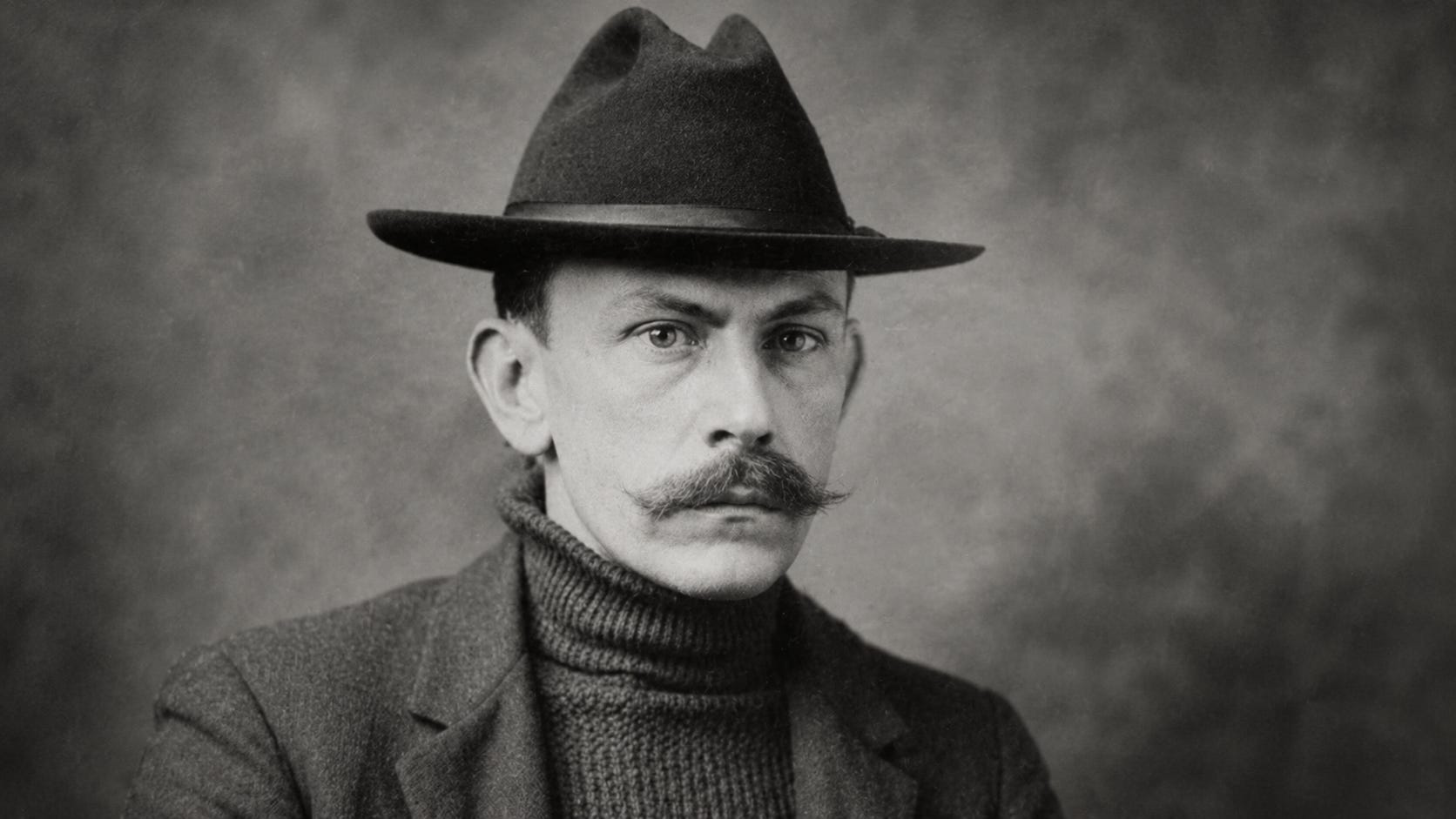
Remembering Adelbert Doisy and the Huntsville Supply Store
Adelbert Doisy came to Scott County on a hunting expedition. He fell in love with the community, fell in love with one of its young ladies, and wound up spending the rest of his life here as one of the most influential business owners in Huntsville’s history. This is the story of the man behind the old Huntsville Supply Company.
Born Oct. 3, 1862, in Cincinnati, Ohio, Adelbert Henry Doisy was the son of Adelbert Edward Doisy (1837-1931) and Mary Neal Kennedy (1842-1925). In some ways, he was behind the times. Scott County — or, rather, the area that would become Scott County, since the county wasn’t actually established until 1849 — was originally settled by longhunters, men who came here on long hunting expeditions and decided to stay. These longhunters first ventured onto the northern Cumberland Plateau in the mid to late 18th century (the earliest written record is of a “station camp” along what we now know as Station Camp Creek in the Big South Fork National River & Recreation Area in the 1760s). After returning to the East to fight in the Revolutionary War, some of the longhunters returned to this frontierland and settled down permanently in the 1800s and 1810s.
By the time Bert Doisy came along, in the 1880s, there were thousands of people living here, many of whom were third- and fourth-generation descendants of the original longhunters. Scott County was still rugged and remote, but it was no longer the frontierland that the earlier longhunters had encountered.
The Doisy family was well-established in Cincinnati, and had been for generations. Bert’s mother’s family — the Kennedys — had also been well-established there for several generations. Bert had no intention of leaving Cincinnati permanently when he hopped a train on the brand-new railroad to Scott County for a hunting trip. But then he met Lina Belle West.
Born April 20, 1876, Lena was the daughter of Jeremiah West (1843-1890) and Malissan Sexton (1844-1893). As much a fixture as Bert’s family was in Cincinnati, Lina’s was in Scott County. Her father had served in the Civil War, and was part of the expansive West family of Helenwood. Her mother was a descendant of Revolutionary War veteran Timothy Sexton, and was part of the Sexton family that had also settled in Helenwood.
Exactly when Bert and Lena met and began courting is not clear. She was, after all, 14 years younger than he was. When the 1900 census was taken, Bert was boarding with James F. Baker (his business partner), and Lena was still living with her parents. The couple were married in 1906 in Boone County, Ky. — near Bert’s native hometown. In 1910, the couple were living in Scott County, and their daughter, Mary Helen, was two.
Bert is best-known, of course, as the owner-operator of the Huntsville Supply Co. store that dominated the retail scene in the county seat for many years. He and James F. Baker, a Huntsville attorney who was the father of Congressman Howard H. Baker Sr., opened the store together in 1897.
Baker’s family played its own indelible role in Scott County’s growth. Everyone is familiar with the story of James’s son and grandson, of course. Both served in Congress, and the latter became one of the most powerful men in Washington as Senate Majority Leader and later as White House Chief of Staff to President Ronald Reagan. But Baker’s wife was Helen Blanche Keen. Her father, Alderson Thompson Keen, was a major in the Union army during the Civil War. It was he who convinced Gen. Ambrose Burnside to march the Army of the Ohio through Scott County en route to seize Knoxville and liberate East Tennessee from the Confederacy in 1863. Keen had become familiar with the area after leading a scouting party of 50 men through the region. He later moved his family to Scott County in the late 1880s.
Burnside’s successful march through Scott County helped to cement the city of Cincinnati’s decision to follow a similar route when it built a railroad linking itself to Chattanooga in the decade after the war ended. It was aboard a train on that railroad that Bert Doisy traveled from Cincinnati to Helenwood in the 1880s, and wound up linking up with Maj. Keen’s son-in-law.
The Huntsville Supply Co. store became a sort of commerce and social hub in Huntsville. Nat Hancock, a former slave who remained in Scott County after gaining his freedom in the early 1860s, was a familiar figure at the store, playing checkers and entertaining the other townsfolk who stopped in to trade or just to socialize.
The historian Esther Sharp Sanderson wrote of Bert Doisy: “Since Huntsville was the county seat and centrally located, people came from all sections of the county to do their trading. Mr. Doisy made many warm and lasting friends due to his jovial disposition and his congenial personality. He was a diligent, efficient businessman and the long years of successful operation of the Huntsville Supply Store can be attributed, in large measure, to his honesty, integrity, and keen business judgment. People from all walks of life felt free to come to him for advice and favors. He was prudent in his business, but he was never known to refuse an honest man a favor.”
As for the store itself, “He bought every kind of produce from the farmers who were glad to exchange them for ‘store boughten’ things. He always paid the highest possible prices for hides, tallow pelts, molasses honey, chickens, eggs, feathers, wool, mountain herbs, gin sang, yellow root, sassafras, sarsaparilla and numerous other things.”
Sanderson wrote that on court days, the store “would be packed to overflowing. Since there was not a restaurant in town, and it was impossible for the hotels to feed the large crowds, the long counters in the store were used to serve food to the public. The bill of fare consisted of cheese and crackers, sardines, salmons, and peaches and tomatoes ‘fixed up’ in a bowl with spoon and crackers.”
Bert and Lina built what would become known as the “Doisy House” that set just off the courthouse square in Huntsville. The home was later owned by Howard H. Baker Jr. and donated to the Scott County Historical Society, serving as the organization’s headquarters for many years. Today it’s owned by Eric Blakley, the son of Huntsville attorney Mark Blakley, who grew up next door.
The Doisys had one surviving child, Mary Helen, born in 1908. (A second daughter, born earlier, died as a baby.) Mary Helen married Daniel Boone Walker in the 1930s. They had two children: Louise Doisy Walker and Daniel Adelbert “Bert” Walker.
Lina died on April 10, 1952, at age 75. Bert died on Feb. 1, 1962. Both are buried at the Buttram Cemetery across from White Rock Baptist Church in Huntsville.
Thank you for reading. Our next newsletter will be Threads of Life tomorrow. If you’d like to update your subscription to add or subtract any of our newsletters, do so here. If you haven’t yet subscribed, it’s as simple as adding your email address!
◼️ About the IH • IH Sports Network • The Encyclopedia of Scott County
◼️ Subscribe • Sponsor • Manage Your Account
◼️ Follow us on Facebook, Instagram, X/Twitter, YouTube
Our Newsletters:
• Monday morning: The Daybreaker (news & the week ahead)
• Tuesday: Echoes from the Past (stories of our history)
• Wednesday: Threads of Life (obituaries)
• Thursday evening: The Weekender (news & the weekend)
• Friday: Friday Features (beyond the news)
• Sunday: Varsity (a weekly sports recap)